Intelligent Management Systems for Smart Greenhouses: From Retail to Agriculture
Published:
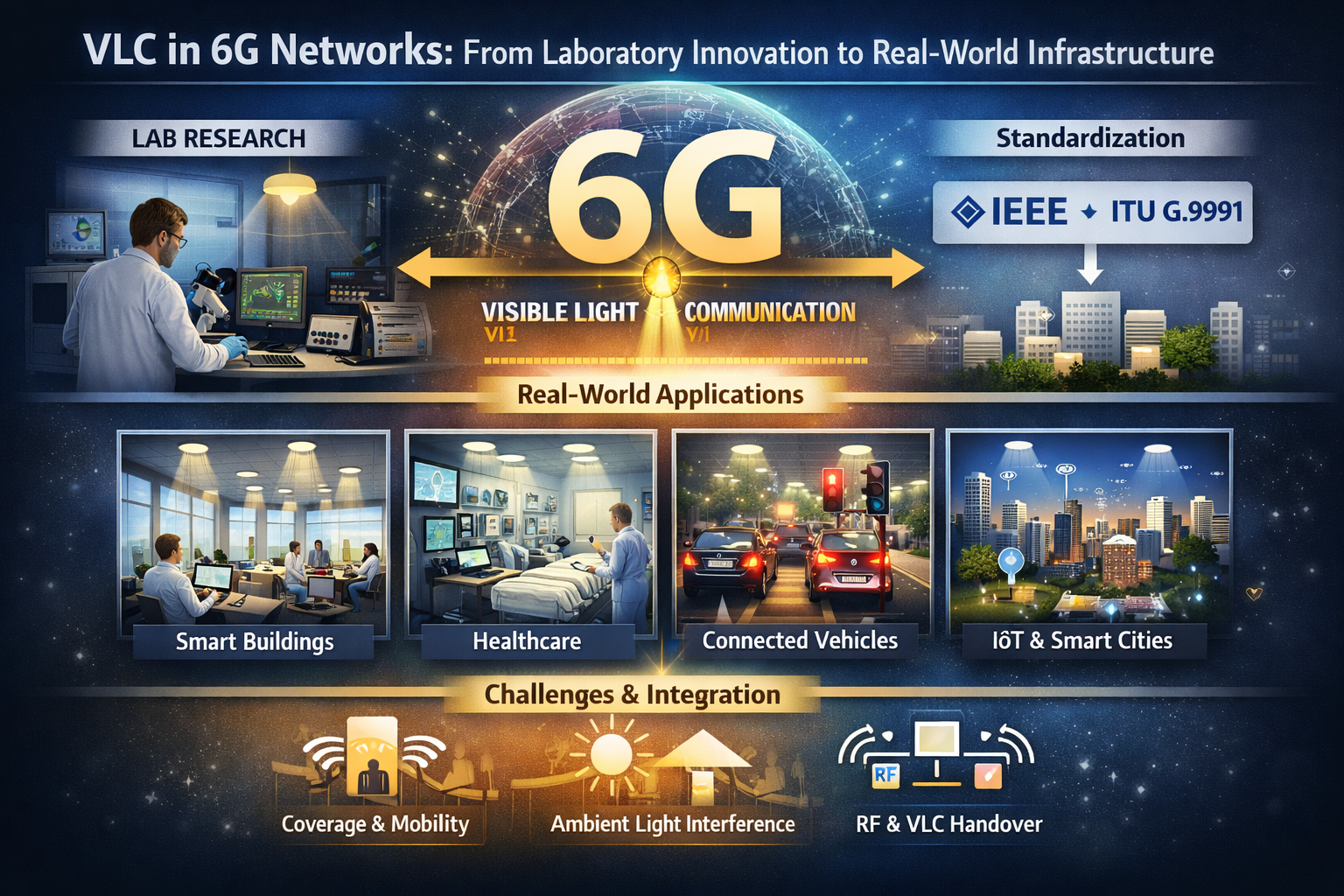
The transition from retail indoor environments to controlled environment agriculture (CEA) represents a natural evolution for Intelligent Management Systems (IMS). Our research, originally validated at ACM MobiCom 2023 for hybrid VLC/RF networks, is now being adapted for greenhouse agriculture with remarkable potential.
Why Greenhouses Need Intelligent Management
Modern greenhouses are data-intensive environments generating terabytes of sensor data annually. Traditional IoT architectures struggle with:
- Network congestion from dense sensor deployments
- Energy constraints limiting remote sensor lifespans
- Latency issues affecting time-critical irrigation decisions
- RF interference impacting crop physiology
The Agri-IMS Architecture
We propose adapting our four core IMS components for agriculture:
| Component | Original Function | Agricultural Adaptation |
|---|---|---|
| IHC | VLC/RF handover | Crop-safe network switching |
| ETL | Tracking | Drone/robot localization |
| ARS | Resource allocation | Precision irrigation scheduling |
| EHM | Energy harvesting | Dual-purpose grow lights |
VLC: The Hidden Advantage
Visible Light Communication using LED grow lights offers unique benefits:
- Dual-purpose infrastructure: PAR lighting + data transmission
- 73% RF radiation reduction: Crop-safe environments
- High bandwidth: No spectrum licensing required
- Physical security: Line-of-sight prevents eavesdropping
Future Research Directions
Our AGRIFARM-AI project will validate this architecture across 2,000m² of greenhouses in Thailand and Belgium, targeting:
- +15% yield improvement under climate stress
- -40% water consumption through precision irrigation
- -25% energy costs via VLC integration
The convergence of telecommunications and agricultural science opens exciting possibilities for climate-resilient food production.